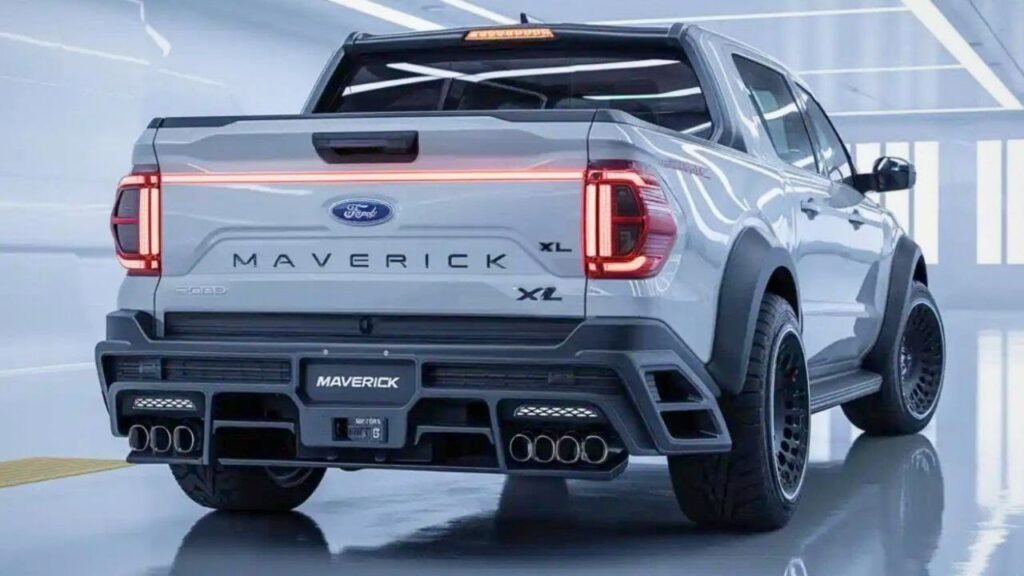
For the last couple of years, recommending the Ford Maverick always came with an annoying asterisk: if you wanted 40 miles per gallon, you were stuck with front-wheel drive. If you needed all-wheel drive for rain, slush, or towing a utility trailer up an unpaved driveway, you had to ditch the hybrid and buy the turbo gas engine instead.
With the 2026 update, Ford fixed that compromise. You can now get the 2.5-liter hybrid powertrain with all-wheel drive, and you can add the factory 4,000-pound tow package to it.
That single change makes the 2026 Maverick one of the most practical daily drivers on the market. Here is a breakdown of what works, what feels cheap, and how to spec one without wasting your money.
What the Hybrid AWD Setup Feels Like on the Road
The standard powertrain combines an Atkinson-cycle 2.5-liter four-cylinder with an electric motor for 191 total horsepower. It uses an electronic continuously variable transmission (e-CVT).
Off the line, the electric motor gives you immediate throttle response. In heavy stop-and-go traffic, the truck crawls forward silently on battery power before the gas engine fires up to assist. On earlier front-wheel-drive hybrids, punching the gas out of a wet intersection caused the front tires to spin and traction control to cut in aggressively. With the new electric rear-axle drive engaging instantly, power delivery feels much more planted.
The 2.0-liter EcoBoost turbo is still available with 250 horsepower and an 8-speed automatic. It is noticeably quicker when passing semi-trucks at 75 mph on the interstate. However, for 90% of buyers using this truck for commuting and weekend yard runs, the hybrid provides plenty of passing power while burning significantly less fuel.
Fuel Consumption: City Commutes vs. Highway Runs
Efficiency is the primary reason to buy this vehicle over a midsize truck like a Ranger, Tacoma, or Colorado.
In suburban driving and slow morning traffic, the Hybrid AWD easily returns between 38 and 40 MPG. The hybrid battery charges itself during coasting and braking, making gridlock where it performs best. On long, continuous highway stretches at 70 to 75 mph, that figure settles closer to 35 or 36 MPG.
By comparison, the 2.0-liter EcoBoost gas model averages around 23 to 25 MPG in mixed driving. If you put 15,000 miles on the odometer each year, driving the hybrid saves you roughly $600 to $800 annually in gasoline at current pump prices.
Cabin Changes: The 13.2-Inch Screen and Interior Ergonomics
The biggest visual upgrade inside the 2026 cabin is the center stack.
Ford dropped the old 8-inch display and installed a 13.2-inch landscape screen running SYNC 4. Wireless Apple CarPlay and Android Auto connect quickly upon startup, and map navigation looks clear and legible across the wider display. Crucially, Ford kept physical dials for audio volume and basic temperature adjustments instead of burying them deep in digital sub-menus.
Storage throughout the cabin remains very well thought out:
-
The door bins have molded dividers that hold tall insulated water bottles upright so they do not tip over during turns.
-
Lifting the rear bench reveals deep plastic bins that easily hold ratchet straps, an emergency tire pump, muddy work boots, or jumper cables out of sight.
-
The center console features modular slots designed to fit 3D-printed cup holders, bag hooks, or phone mounts.
The trade-off is interior material quality. Almost every surface—from the door panels to the dash top and center console—is made of hard, molded plastic. It is durable and wipes clean with a damp rag, but it scratches easily if you toss keys or metal tools onto the passenger seat area. Wind noise around the side mirrors also picks up noticeably once you cross 70 mph.
Understanding the 4.5-Foot Bed Utility
The Maverick uses a unibody chassis shared with the Ford Bronco Sport and Escape, meaning it sits much lower to the ground than traditional trucks.
Because the load height is under 30 inches, you can lift heavy bags of concrete, potting soil, or furniture into the back without straining your back. The multi-position tailgate can be locked at a 45-degree angle, lining up directly with the rear wheel arches. This allows you to slide flat 4×8 sheets of plywood or drywall across the bed without them snapping or sliding around.
If you spec the 110V/400W household-style outlet in the rear bed wall, it produces enough wattage to run cordless tool chargers, air mattress pumps, or string lights at a campsite.
Which Trim Level Makes Sense?
Ford sells the 2026 Maverick in XL, XLT, Lariat, and specialized trims like the Tremor and Lobo.
-
XL (Base): Best for commercial fleets or absolute budget builds. It covers the basics but lacks power-adjustable mirrors, alloy wheels, and key convenience tech.
-
XLT (The Value Choice): This is the configuration most private buyers should look at. It includes alloy wheels, upgraded cloth seating, a power-locking tailgate, and gives you access to the Hybrid AWD drivetrain and the 4K Tow Package. Keep the options minimal, and this build stays around the $29,000 to $31,000 mark.
-
Lariat: Adds synthetic leather, dual-zone climate control, acoustic glass, and adaptive safety systems. However, once the price tag crosses $36,000 to $38,000, you are entering the price territory of larger, more capable midsize trucks.
Summary Assessment
The 2026 Ford Maverick Hybrid AWD succeeds because it does not try to be a heavy-duty workhorse. It delivers genuine utility—hauling gear, carrying dirty cargo, and pulling light trailers—while driving with the ease, comfort, and fuel costs of a compact crossover. For daily commuters who want truck practicality without truck fuel bills, it remains the most sensible choice in the segment.